Cover Image Rendering Credit: https://senakw.com/design.
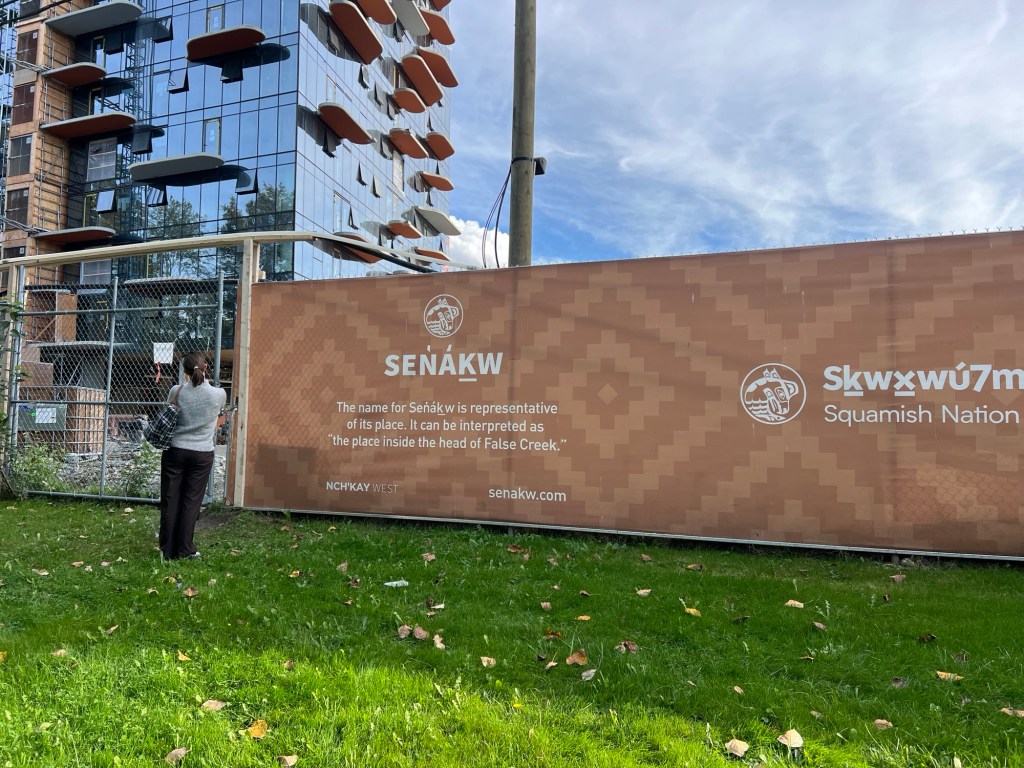
This past week, I was in Vancouver for the annual CREW conference, and I had the privilege of taking a tour of the Squamish Nation’s new real estate development, Sen̓áḵw. The name was taken from the name of the village once located in that part of Vancouver, located at the head of False Creek. Now, they are turning it into several high-rise towers aimed at providing housing for tribe members and addressing part of Vancouver’s housing crisis.
Originally, the Squamish in this part of what is now Vancouver originally lived near False Creek in the village of Senakw, and the government created an official reserve for the sake of protecing the village. However, over the course of decades, most of the land that was once a part of Sen̓áḵw was gradually expropriated for various thoroughfares and transit. In 1913, British Columbia formally and illegally forced the wholesale surrender of the village lands. No Squamish were allowed to remain where their village had once been.
By 2002, the Federal Court returned a small portion of the land to the Squamish Nation, just 10.48 of the original 80 acres that had once belonged to the reserve. This land is where Nch’ḵay̓ Development Corporation, the economic development corp for the Squamish nation, is now developing.
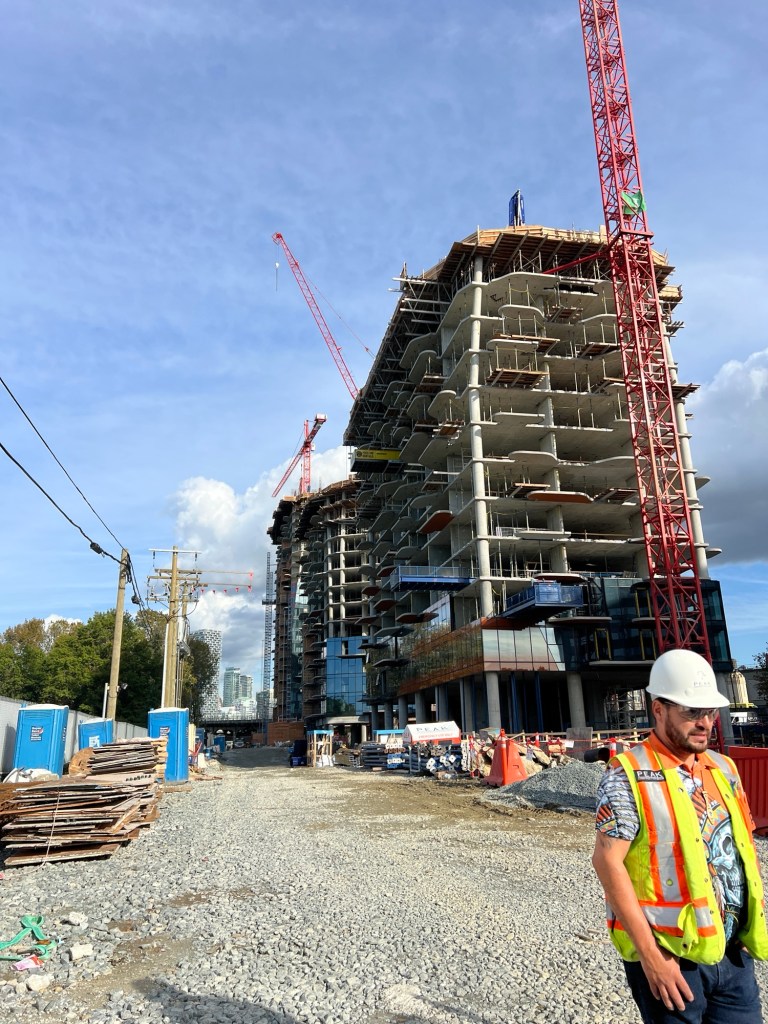
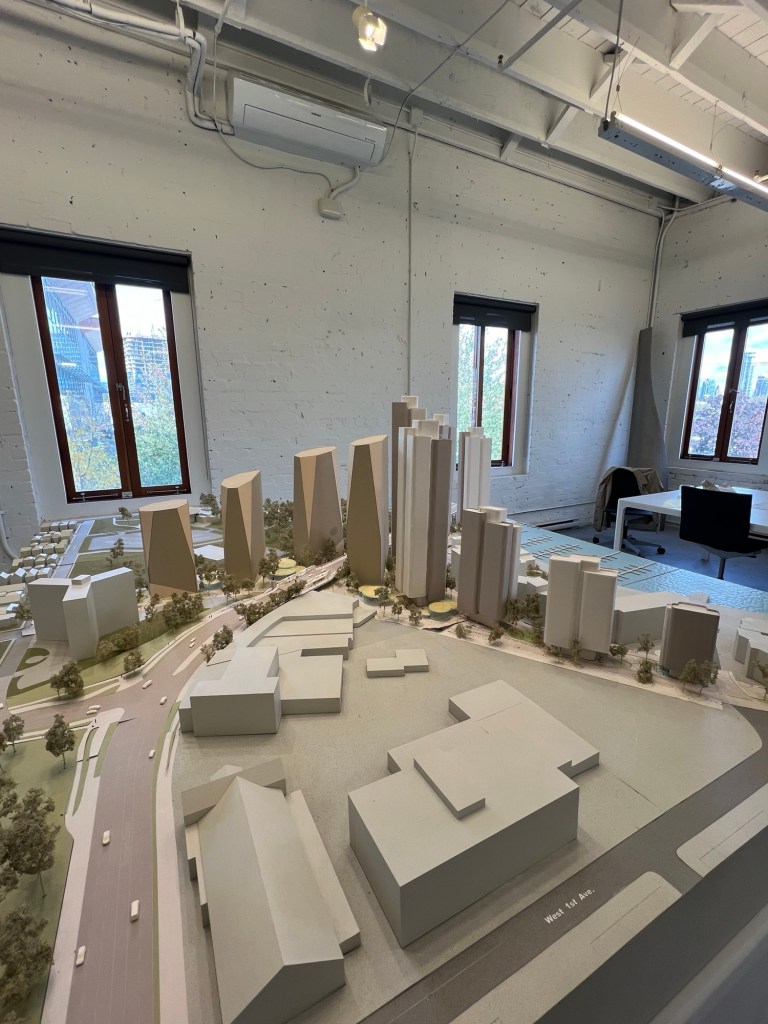
Thanks to Nch’kay, we were granted a tour of the grounds. I was blown away by how much building had been done, especially with the limited amount of land available. The sliver of land is located directly next to the Burrard Street Bridge. However, with the development being transit focused, they are making the most of it. While there only be parking available for about 14% of the total occupancy, there will be ample bicycle parking (4800 spots). In fact, it is possible that most transit in and out of Sen̓áḵw will be done on foot or by bike.
Each bottom and top floor of each high-rise building, of which there are eleven, is reserved for public use. The development aims to have restaurants, a fitness center, a grocery store and daycare, as well as Indigenous-owned businesses that would benefit greatly from having office-space on reserve.
Why is this so exciting?
Sen̓áḵw is the largest Indigenous development in Canada, and I struggle to name anything comparable in the United States—it is hard to imagine another place where Indigenous land is located so close to an urban area with as dire a housing shortage as Vancouver. The fact that 1200+ of the more than 6000 units will be marked for affordable housing will be particularly significant for those in dire need of housing, alongside the number of units reserved for Squamish Nation members.
It’s important to note that this development alone cannot solve the existing problems that made housing so hard to come by in the first place, but it is a step in the right direction, as well as a testament to the unique powers that Indigenous/First Nations hold on reserve land. Unlike other major developments, Sen̓áḵw is not held back by myriad permitting delays; it therefore has the ability to break ground and make progress with astounding speed.
The Nch’kay team was also eager to highlight that the decision to develop the reserve land was the result of an 87% popular vote within the Squamish Nation.
The most interesting facts to me were how even the development approach targeted uplifting Indigenous workers and voices. The development features a $6,000,000 CAD art budget which prioritizes Squamish Nation artwork, and construction has engaged in a training program that trains and employs Indigenous tradesworkers onsite. So far, they have achieved about 40% Indigenous workers on the project. The effort mandates that the development team actively reaches out to and works to hire Indigenous workers and Indigenous owned companies.
The Native City
What this says about the Native City is that it is not necessarily in opposition to the dense urbanism that we tout as sustainable. Sen̓áḵw‘s design matches the shiny high rises of the Vancouver skyline, and its particular emphasis on varied means of transit allows it to be fully integrated into the surrounding urban fabric. After touring the site and the surrounding, it’s incredibly clear with the ample bike paths and proximity to the seawall, residents will have no issue getting around. It’s only a pleasant ten minute walk to Granville Island, for example.
Most interestingly, Sen̓áḵw is an example of how Indigenous-led developments can be incredibly sustainable, when when they are ultra-modern high rises. Senakw intends to be a net-zero operation, using mass timber, waste heat, and plans to meet high standards in BC’s energy code. These efforts appear deeply rooted in Squamish values and respect for the environment, and I believe they set a positive precedent for future development in Vancouver and across Canada.
This has been a rather clinical overview of a really amazing project, but I want to emphasize how exciting this development is. As someone who enjoys city life but simultaneously wishes to be rooted in Indigenous culture and values, it’s nice to see how these two aspects of my life are not actually always in opposition. By 2030, we will have significant occupancy at Sen̓áḵw and perhaps more people will begin to see where this kind of development can take us.
 Native City Girl
Leave a comment