
Hato, reader. Somewhere between this post and the last I joined, worked on, and left a working group—sponsored by a Philadelphia city councilmember—targeted at getting a commission for Native American/Indigenous folks in the city. This eventual, mayoral commission, is still an end goal in my mind and in the minds of others in the community, but as of now the odds aren’t looking great.
I can’t type out all of the disagreements on the internet, that’s not fair. What is fair is saying that this effort, which has played out over the course of several years, is fraught with misfortune and tension, doomed to fail about four or five times since the very first try. The exact reasons why are moot now, since I stepped down as secretary several days ago; I didn’t write about this before this very moment as the tensions were too high and I was not resolved on what to do or how to act.
Reader, I played Switzerland. To a degree, this worked, but I realize that sometimes action is critical, and perhaps more action might have been useful.
Regardless, by this week group disagreement, which was entirely removed from me, reached a boiling point, and I found myself wondering what went wrong.
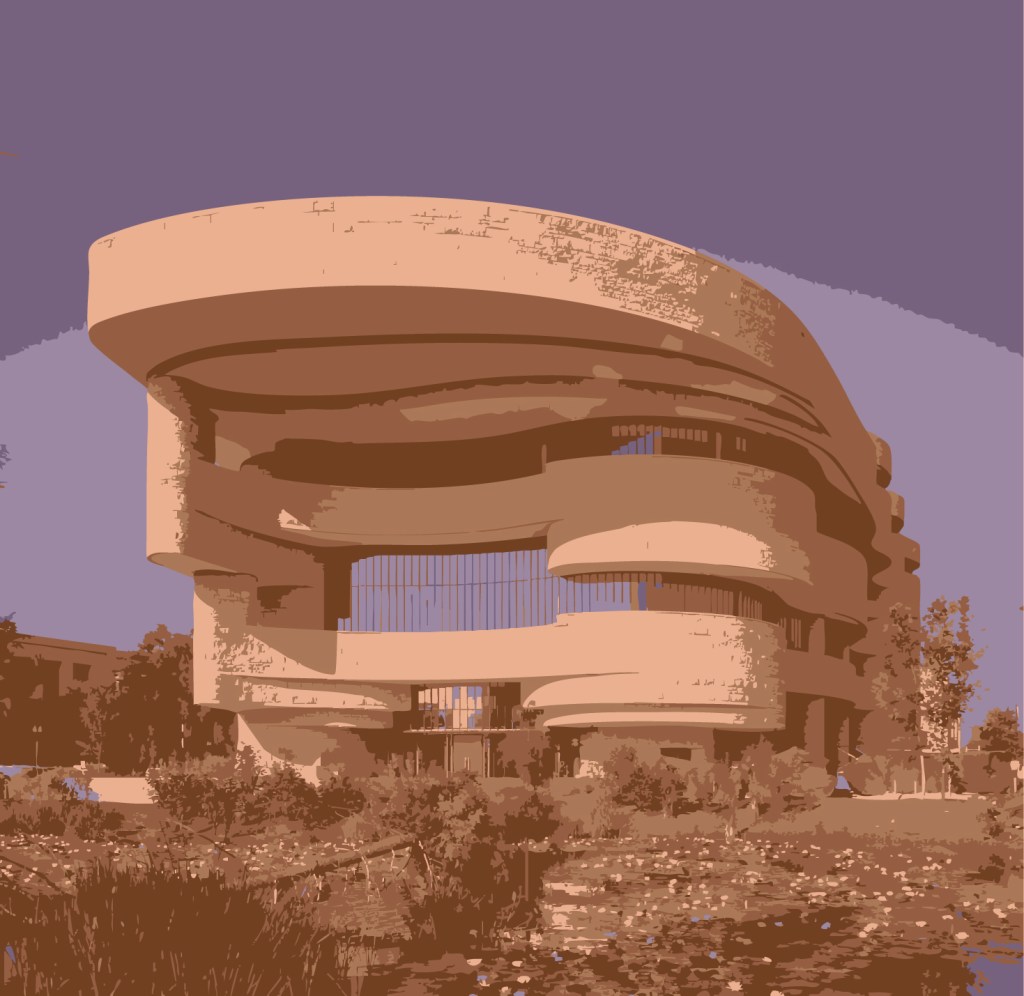
Concurrently I have been working on what I deem to be critical research which I believe to be somewhat applicable to this problem (which reads as a very loose Reddit AITA, perhaps?). My current project, a deep-dive into the founding of the National Museum of the American Indian (NMAI), includes research focused on the museum’s program, wherein the architects (VSBA of Philadelphia) worked across the continent, in both the United States and Canada, to interview hundreds of tribes and thousands of Natives to determine what, if anything, they wanted for NMAI.
Critically, NMAI is a revelutionary invention on its own: never before had such a museum existed. Although Indigenous groups have their own cultural museums, it is incredibly different to have an intertribal museum, let alone one the scale of a continent. It followed that the program had to be revolutionary, and indeed it was. The process VSBA undertook in partnership with the Smithsonian spanned years of consultations and meetings with tribes on their ancestral territory, led by their elders and community leadership. While this sort of thing–a consultation–was used on other Indigenous-focused projects, it had never been the case that Indigenous consultants were considered authorities on what should be done, and yet, on this project, they were.
My forthcoming writing about this is targeted at clarifying what we can take from this process, learning how the architects and museum leadership used hundreds of hours of meetings to determine the future for the institution. They developed a program that outlined the do’s and don’ts and worked to make each nation, tribe, or community feel heard. This process even went as far as to conduct a survey across the whole of the United States and Canada to ask Native-led museums how to properly store their artifacts, objects, and loved materials. The responses were faithfully and carefully documented in the program to ensure that every process, every ritual, and every rule would be honored, for every community.
This program was not universally successful, but to succeed with everyone would be impossible. Rather, they achieved community embrace by doing their best and by taking the time to listen. This is especially impressive in the intertribal, multi-ethnic context in which the museum operates.
I imagine what we can take from Washington DC as I look to Philadelphia, as I walk away from failed community work in my city. I think, in my heart, that our internal conflict has come from a lack of listening and collaboration within our own intertribal community. Seeing as I’ve spent months working on a project about listening and collaboration, I find it hard to bear that the community is strangling itself, unable to find ways to reconcile disagreement and find common ground. Fault as there may be with the Smithsonian, NMAI has managed to last. I believe that to build something resilient in Philadelphia, and indeed in any community, we have to do the difficult task of listening to one another, no matter how long it takes. It may take years.
More about this project will be posted in May 2025. Hold tight!
Sources:
The National Museum of the American Indian : critical conversations / edited by Amy Lonetree and Amanda J. Cobb
The land has memory: indigenous knowledge, native landscapes, and the National Museum of the American Indian by Blue Spruce, Duane; and Thrasher, Tanya
Spirit of a Native place: building the National Museum of the American Indian by Duane Blue Spruce, editor.
 Native City Girl
Leave a comment